Pork Adobo with Pineapple Recipe (Filipino Sweet and Savory Pork Adobo)
If you’re looking for a delicious twist on the classic Pork Adobo with Pineapple, you’re in for a treat. This flavorful Filipino favorite combines the rich, savory taste of traditional adobo with the natural sweetness and tanginess of juicy pineapple. The result is a comforting dish that’s perfectly balanced -salty, sweet, tangy, and incredibly satisfying.



Pork Adobo with Pineapple
Equipment
- Mixing bowl
- Measuring cups and spoons
- Knife
- Cutting board
- Large skillet or sauté pan
- Deep pot
- Wooden spoon or Silicone Spatula
- Tongs
Ingredients
- 1 kilogram pork belly cut into serving pieces
- 1 cup pineapple syrup from canned pineapple
- 1 cup pineapple chunks
- 1 medium onion chopped
- 6 cloves garlic minced
- ½ cup soy sauce
- ⅓ cup vinegar
- ½ teaspoon ground black pepper
- 1 teaspoon whole peppercorns
- 2–3 bay leaves
- 1 cup water add more if needed
Instructions
- In a bowl, combine pork belly, pineapple syrup, soy sauce, and ground black pepper. Mix well and marinate for at least 1 hour.
- Separate the pork from the marinade and reserve the marinade.
- Heat a little oil in a pan and sear the pork until lightly browned. Remove and set aside.
- In the same pan, sauté the onion until translucent. Add the garlic and cook until fragrant.
- Return the pork to the pan. Add the whole peppercorns, bay leaves, reserved marinade, and water.
- Cover and simmer over medium heat until the pork becomes tender, adding more water if necessary.
- Once tender, pour in the vinegar and add the pineapple chunks. Do not stir immediately. Let it boil for about 3 minutes.
- Stir gently, then continue simmering until the sauce reaches your desired consistency.
- Serve hot with freshly steamed rice.
Notes
- Pork belly gives the richest flavor, but pork shoulder (kasim) also works well.
- Do not stir immediately after adding the vinegar to avoid a raw vinegar taste.
- Add extra water if the liquid reduces before the pork becomes tender.
- For a richer, “nagmamantika” style adobo, continue simmering until the sauce is thick and the pork releases its natural fat.
- Leftovers taste even better the next day as the flavors continue to develop.
Nutrition
Pork adobo has long been considered one of the most iconic dishes in the Philippines. Every family has their own version, with some recipes leaning more toward salty, while others are slightly sweet or extra garlicky. Adding pineapple gives this timeless dish a refreshing upgrade without taking away the comforting flavors that everyone loves.
This recipe uses pork belly, which becomes tender and flavorful after simmering in soy sauce, vinegar, garlic, onions, and pineapple syrup. Pineapple chunks are added toward the end of cooking, creating little bursts of sweetness in every bite. Whether you are cooking for a simple family dinner or preparing food for a celebration, this Pork Adobo with Pineapple recipe is sure to become a household favorite.
How to cook Pork Adobo with Pineapple
What Is Pork Adobo with Pineapple?


Pork Adobo with Pineapple is a variation of the classic Filipino adobo. It follows the traditional cooking method of simmering pork in soy sauce, vinegar, garlic, peppercorns, and bay leaves, but adds pineapple syrup and pineapple chunks for a naturally sweet and fruity flavor.
Unlike recipes that use sugar to sweeten the sauce, this version relies on pineapple syrup, which blends beautifully with the savory ingredients. The sweetness balances the vinegar’s tanginess while keeping the rich, umami flavor that makes adobo so irresistible.
The pork slowly absorbs all the flavors as it cooks, resulting in meat that is juicy, tender and packed with flavor. The reduced sauce coats every piece beautifully, making it absolutely perfect with a steaming bowl of white rice.
What Is Pineapple Syrup?

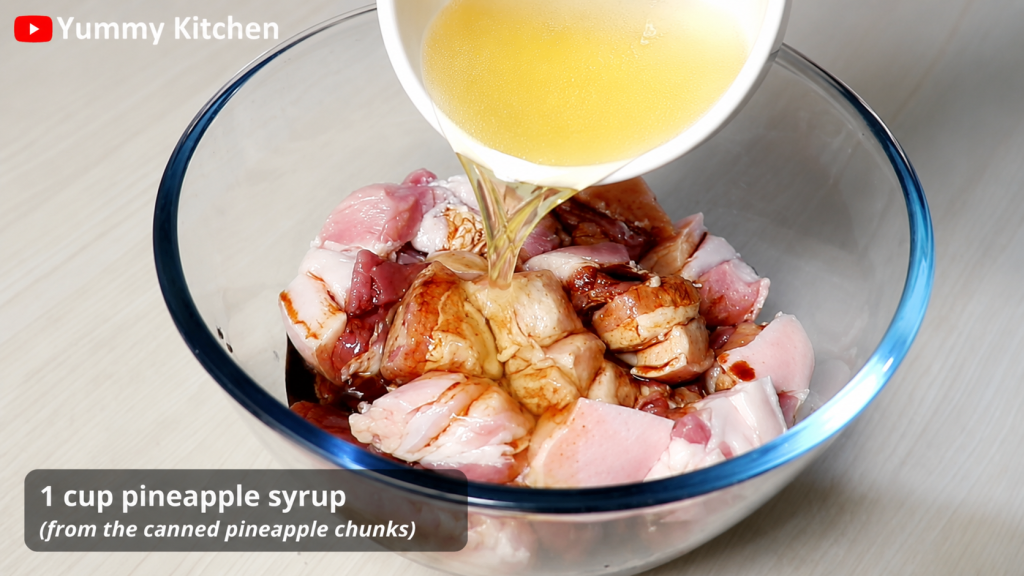
One ingredient that makes this recipe extra special is pineapple syrup. This is simply the sweet liquid found inside canned pineapple chunks.
Instead of throwing it away, the syrup becomes part of the marinade and cooking liquid. It adds a gentle sweetness while also helping tenderize the pork. Since pineapples naturally contain bromelain, an enzyme known for softening meat, they help make every bite extra tender.
The syrup also creates a deeper, more rounded flavor that complements soy sauce and vinegar perfectly. It’s a simple ingredient that transforms an ordinary adobo into something truly memorable.
Why You’ll Love This Recipe
There are plenty of reasons why this Filipino Pork Adobo with Pineapple deserves a spot on your weekly menu.
First, it is incredibly easy to prepare. The ingredients are simple and widely available in supermarkets.
Second, the balance of sweet and savory flavors makes it enjoyable for both kids and adults. Even those who usually find adobo too tangy often enjoy this sweeter version.
Another reason to love this recipe is its versatility. You can use pork belly for a richer dish or substitute pork shoulder if you prefer leaner meat with enough fat to stay tender.
This recipe is also perfect for meal preparation. Like traditional adobo, the flavors continue to develop overnight, making leftovers even more delicious the next day.
Most importantly, it is a comforting Filipino dish that never goes out of style.
One more reason this recipe stands out is its wonderful aroma while cooking. As the garlic, soy sauce, vinegar, and pineapple simmer together, they fill your kitchen with an inviting fragrance that instantly makes everyone hungry. It’s one of those comforting dishes that brings families to the table, making ordinary weeknight dinners feel warm, special, and truly satisfying for everyone.


Ingredients
To make this flavorful Pork Adobo with Pineapple, prepare the following ingredients:
- 1 kilogram pork belly, cut into serving pieces
- 1 cup pineapple syrup
- 1 cup pineapple chunks
- 1 medium onion, chopped
- 6 cloves garlic, minced
- ½ cup soy sauce
- ⅓ cup vinegar
- ½ teaspoon ground black pepper
- 1 teaspoon whole peppercorns
- 2 to 3 bay leaves
- 1 cup water, or as needed
These pantry-friendly ingredients work together to create a rich, flavorful sauce that is perfect for spooning over hot rice.
Step-by-Step Method
- Start by combining the pork belly, pineapple syrup, soy sauce, and ground black pepper in a bowl. Mix well until every piece of pork is coated, then marinate for at least one hour. Marinating allows the meat to absorb more flavor before cooking.
- Separate the pork from the marinade and reserve the liquid. Heat a little oil in a pan and sear the pork until lightly browned. This step helps develop extra flavor and gives the meat a beautiful color.
- Using the same pan, sauté the chopped onions until softened. Add the minced garlic and cook until fragrant.
- Return the seared pork to the pan. Add the whole peppercorns, bay leaves, reserved marinade, and water. Cover and simmer over medium heat until the pork becomes fork-tender. Add more water if needed during cooking.
- Once the pork is tender, pour in the vinegar and add the pineapple chunks. Avoid stirring immediately. Let the vinegar boil undisturbed for about three minutes to remove its raw taste.
- Afterward, gently stir everything together. Continue simmering until the sauce reaches your preferred consistency. Some like it slightly saucy, while others prefer the sauce reduced until it’s thick and glossy.
- Serve hot with freshly cooked rice.


Tips and Variations
For extra flavorful adobo, don’t skip the marinating step. Even one hour makes a noticeable difference.
Pork belly creates a richer dish, but pork shoulder also works well if you want slightly leaner meat.
Always sear the pork before simmering. The browned surface adds another layer of flavor to the finished dish.
Avoid stirring immediately after adding vinegar. This traditional cooking technique helps mellow the vinegar without leaving a sharp, acidic taste.
If you enjoy spicy food, add chopped bird’s eye chilies while simmering.
You can also include hard-boiled eggs during the final few minutes of cooking for a heartier meal.
Some cooks like adding a little brown sugar, but the pineapple syrup usually provides enough sweetness.
For an even richer sauce, simmer until the pork begins releasing its natural fat and the sauce becomes slightly oily, known by many Filipinos as “nagmamantika.”
Storage and Reheating
One of the best things about Pork Adobo with Pineapple is how well it keeps.
Allow the dish to cool completely before transferring it into an airtight container. Store it in the refrigerator for up to four days.
For longer storage, freeze individual portions for up to two months.
To reheat, warm the adobo in a saucepan over low heat until heated through. Add a splash of water if the sauce has thickened too much. You can also microwave individual servings for a quick meal.
Many Filipinos agree that adobo tastes even better the next day because the pork has more time to absorb the flavorful sauce.
Serving Suggestions
This Filipino Pork Adobo with Pineapple is best enjoyed with hot steamed rice, which perfectly soaks up the rich, savory sauce.
For a complete meal, pair it with sautéed kangkong, steamed vegetables, or a fresh cucumber and tomato salad to balance the richness of the pork.
It’s also a wonderful dish to serve during birthdays, fiestas, holiday gatherings, or Sunday family lunches. Since it reheats beautifully, it’s an excellent make-ahead recipe for parties and potlucks.
If you have leftovers, shred the pork and use it as a filling for sandwiches, rice bowls, or fried rice the next day.


Conclusion
If you are searching for an easy yet impressive Filipino meal, this Pork Adobo with Pineapple recipe is one you’ll want to make again and again. It takes everything people love about classic adobo and elevates it with the bright, natural sweetness of pineapple.
The tender pork, rich sauce, and juicy pineapple chunks create a comforting combination that’s both familiar and exciting. Every bite delivers the perfect harmony of savory, tangy, and sweet flavors that make this dish unforgettable.
Whether you are introducing someone to Filipino cuisine or simply looking for a fresh take on a beloved classic, this recipe is an excellent choice. Serve it with plenty of rice, gather your family around the table, and enjoy a homemade meal that is guaranteed to disappear quickly. Once you’ve tried this sweet and savory version, it just might become your new favorite way to enjoy Pork Adobo with Pineapple.